Community housing providers in rural communities are operating under increasing pressure. Small, often aging teams are being asked to manage growing regulatory requirements, rising financial pressures, building maintenance, and increasing housing demand, all with limited resources.
As a result, the ability to maintain community housing, protect tenants’ quality of life, and preserve a strong local presence is becoming more fragile.
Logéco: A regional tool for community housing preservation
Logéco was created in response to these growing pressures. Designed as a shared preservation and development tool, it acquires, consolidates, renovates, and manages buildings in order to protect affordable housing from speculative pressures while supporting smaller organizations in rural regions.
By enabling direct intervention when organizations or properties face challenges, Logéco acts as a practical tool for stabilizing and strengthening community housing.
Its work includes supporting the transfer or management of buildings, facilitating organizational partnerships and mergers, and helping organizations navigate periods of transition. These interventions help stabilize vulnerable situations and preserve community housing that might otherwise deteriorate or be lost.
In rural communities, where financial, technical, and human resources are often limited, this kind of support is becoming increasingly important. It allows organizations to share responsibilities, pool expertise, and strengthen their operational capacity in order to ensure the long-term sustainability of both housing and community services.
Learn more about the model
Subscribe to the webinar on May 21. Logéco will discuss how their strategies are being implemented in practice and what other regions can learn from the experience.
Operating at a regional scale also allows Logéco to connect organizations and support initiatives that would exceed the capacity of a single provider. The approach reflects a broader movement toward consolidation and professionalization in the community housing sector, increasingly driven by tools adapted to regional realities.
The initiative is led by the Fédération des OSBL d’habitation du Bas-Saint-Laurent, de la Gaspésie et des Îles-de-la-Madeleine (FOHBGI), with support from several partners working on these issues. The project also received support through the Sector Transformation Fund’s Sector Impact Projects stream, helping strengthen this collective capacity for action.
Consolidating to better protect: A strategy for organizational integration
Logéco’s approach begins by identifying organizations facing the greatest challenges, particularly those dealing with governance, management, or financial sustainability issues. This work is carried out alongside local partners, who help identify vulnerable situations and support early intervention.
Once needs are identified, organizations receive support tailored to their realities. This may include management assistance, shared-service arrangements with other organizations, or exploring amalgamation and merger options.
These efforts help create a more stable framework for managing assets, sharing operational functions, and supporting local teams. In turn, they help preserve tenant services and protect community housing assets while respecting local realities.
The approach moves organizations away from a fragmented model, where each operates independently with limited resources, toward a more collaborative system better equipped to respond to current challenges.


Building capacity for the long term
To support this transformation, Logéco is investing in its own organizational capacity. This includes hiring specialists, implementing shared management tools, and developing common governance and organizational support practices.
Through this work, Logéco is helping build a regional hub of expertise capable of providing more coordinated, strategic, and proactive support to local organizations.
The impacts are tangible for organizations, tenants, and communities alike. Operations are becoming more stable, emergency situations are decreasing, and organizations are better positioned to plan for the long term.
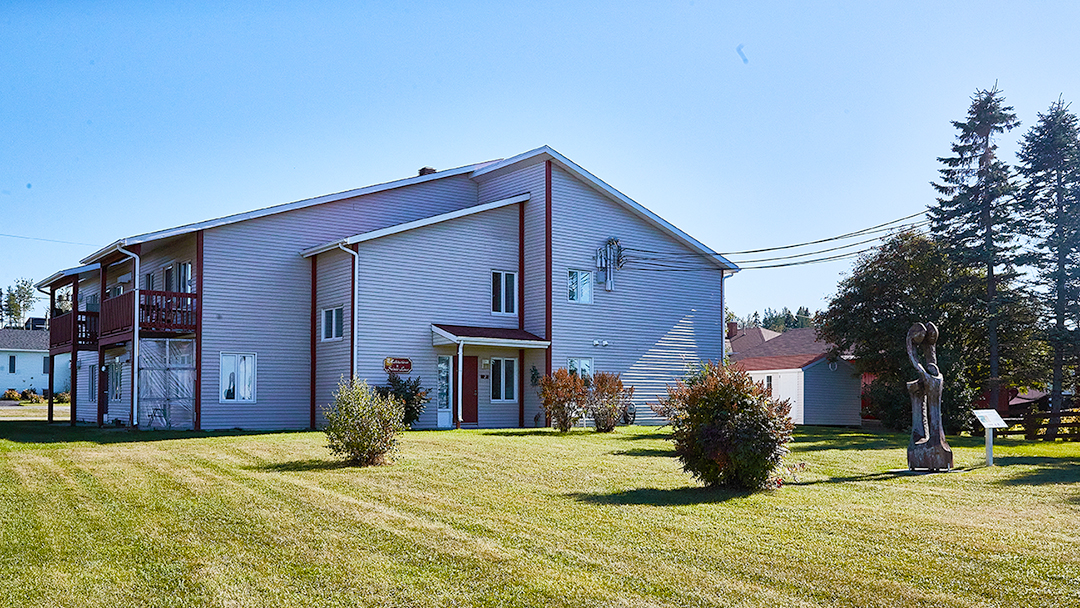
To date, nine organizations have merged or are in the process of doing so, representing more than 110 housing units across 10 buildings located in seven municipalities and five regional county municipalities. Most units have been renovated while keeping rents below the local market median.
Over the longer term, the initiative aims to support the consolidation and development of up to 500 community housing units over the next five to 10 years.
An approach that could inspire other regions
With support from the TIESS, the initiative’s different phases, tools, and lessons learned are being documented to support adaptation elsewhere. The goal is to help other regions facing similar challenges adapt this approach to their own realities.
Several sectoral and institutional partners are also contributing to this work. The Réseau Québécois des OSBL d’habitation (RQOH) supports its regional federations through knowledge sharing and collaboration around mutualization, consolidation, and community housing. Meanwhile, the Société d’habitation du Québec and the Canada Mortgage and Housing Corporation support initiatives related to the preservation, financing, and development of social and community housing in Quebec.
Strengthening local capacity for the future
Logéco’s work demonstrates that consolidation does not mean standardization. Rather, it provides practical tools that help local initiatives continue to grow and evolve.
In the face of today’s challenges, consolidation has become an important lever for action. It helps maintain essential services, preserve local ties, and gives organizations the capacity to operate sustainably.
In environments where resources are limited, smaller organizations and rural initiatives are often the most vulnerable. Their long-term sustainability depends not only on their ability to adapt, but also on the strength of the relationships they build within their broader ecosystem.