Entre Nous Femmes Housing Society (ENFHS) is a non-profit housing provider that has grown from a small initiative into a multi-project organization delivering and operating affordable housing at scale.
Across many regions of the country, community housing providers face the same structural pressure: demand continues to rise, costs escalate, portfolios age, and long-term operating agreements near expiry. For many organizations, the issue is no longer growth itself, but the capacity to deliver it in a way that remains financially viable and operationally sustainable.
ENFHS approached this challenge by reframing growth as an organizational issue rather than a pipeline issue. Instead of focusing first on increasing unit counts, the organization focused on building the internal systems required to support scale. This meant aligning governance, financial planning, development capacity, and partnerships into a single operating model.
The result is a transition from a primarily operations-focused provider to a multi-project, non-profit developer capable of delivering mixed-income housing at scale while maintaining deep affordability. Since 2021, ENFHS has obtained approval for three development proposals, launched a new development, and initiated two major redevelopments, while continuing to grow its operational and development capacity.
Why change became necessary
Like many community housing providers, ENFHS built its portfolio through incremental growth. The organization managed and maintained its assets effectively, expanding through acquisitions, asset transfers, and program-driven opportunities. This model provided stability and predictable operations.
But over time, the limitations of this approach became more visible, and ENFHS saw a challenge coming. By 2028, all its operating agreements would have expired, and the organization had to determine what to do with an existing stock of buildings for which it would no longer receive subsidy. New financing approaches were required.
Added to this, construction and land costs had increased, placing pressure on project feasibility. At the same time, demand intensified across several demographics, including families, seniors, and people requiring accessible housing.
This created a structural imbalance. The organization had strong operational expertise but limited capacity in development, financial structuring, and long-term portfolio planning. Growth based on opportunity alone no longer aligned with the scale of need.
Under the leadership of CEO Lilian Chau, the organization addressed these challenges by shifting focus. The board expanded to include expertise in real estate, governance, and finance. A new executive leadership team brought experience in development, capital planning and financing. Together, they redefined the organization’s role in the housing system and committed to a growth strategy that could support larger and more complex projects.
Building a stronger foundation
ENFHS addressed this shift through a coordinated transformation effort that went beyond traditional strategic planning. The organization aligned its strategic, financial, operational, and governance frameworks to create a single, integrated approach to decision-making. This included efforts to link long-term growth targets to real estate planning, embed financial modelling into strategic choices, and clarify how governance structures would support faster and more informed decisions on development projects.
Through the Strategic Planning Transformation Project, supported by the Centre and partners with $85,000 in funding, the organization developed an integrated set of tools: a strategic plan, a long-term real estate strategy, a financial model, and updated governance and operational policies.
The value of this work lies in how these elements connect.
- The strategic plan defines growth targets and priority populations.
- The real estate strategy translates these into site-level actions such as redevelopment, acquisitions, and densification.
- The financial model introduces a 10-year planning horizon that incorporates debt, reserves, and risk tolerance.
- Governance updates clarify decision-making authority between the board and management, particularly for development projects.
This alignment creates a structured decision-making framework. ENFHS frequently refers to its strategic plan as its “northern star,” using it to evaluate development opportunities, partnerships, and financing decisions against long-term organizational priorities. Opportunities are assessed based on long-term fit, financial viability, and organizational capacity rather than short-term funding availability.
Expanding how housing is delivered
With a defined direction in place, ENFHS expanded its role beyond property management. The organization now develops, redevelops, and acquires housing while continuing to operate its existing portfolio.
This shift required building internal development capacity. New roles were introduced in project management, financial analysis, procurement, asset management, and community engagement. The organization developed expertise in responding to RFPs, structuring layered financing, managing multi-year development timelines, and coordinating redevelopment projects involving multiple stakeholders and funding streams.
ENFHS also adopted a more flexible development approach. On some projects, the organization acts as the lead developer. On others, it participates as a strategic partner, depending on the needs of the project and the expertise required. This flexibility allows the organization to pursue a wider range of opportunities while maintaining financial discipline and operational oversight.
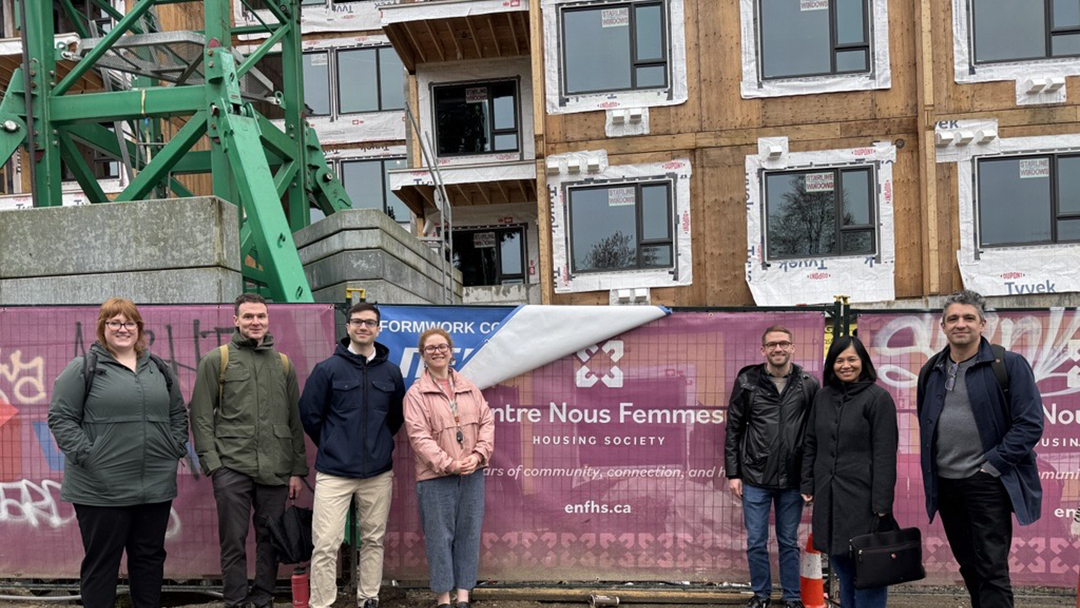
The current pipeline reflects this change. ENFHS has more than 500 units under construction and over 1,000 units in development. Projects include redevelopment of existing sites, new construction on public and owned land, and acquisitions of existing buildings.
Project design follows a consistent framework. Unit mix reflects household needs. Accessibility is integrated at the outset. Rent structures balance affordability with long-term financial sustainability.
Partnerships as a system-level strategy
ENFHS uses partnerships as a core delivery mechanism rather than a project-level tool.
Collaborations with organizations such as M’akola Housing Society and Hogan’s Alley Society illustrate this approach. These partners contribute community-specific expertise, relationships, and insight into housing needs that extend beyond ENFHS’s internal capacity. This allows developments to reflect the priorities of the communities they serve.
Partnerships also expand delivery capacity. They enable access to land, strengthen funding applications, and support co-development models that distribute risk across organizations.
At a system level, this approach contributes to a more coordinated housing ecosystem. Organizations combine strengths rather than competing for isolated opportunities.
Professionalizing the organization to support scale
Delivering multiple projects simultaneously required a shift in how ENFHS operates internally.
The organization expanded from a small operations team to a multidisciplinary structure with defined roles in development, finance, asset management, and community engagement. Staff now lead financial modelling, funding applications, and project oversight.
Governance evolved in parallel. The board expanded to include expertise in real estate, finance, and risk management, enabling informed decision-making on complex development and investment decisions.
ENFHS also introduced systems to support coordination and consistency. These include formalized governance policies, HR platforms, project management tools, and standardized processes for evaluating and advancing projects.
This transition reflects a shift toward a more operationally robust and mature organization. ENFHS invested proactively in systems and capacity before growth fully materialized, allowing the organization to scale while maintaining consistency in governance, financial oversight, and mission alignment.
Lilian Chau understands that ENFHS can’t grow without investing in its human resources, people, and structures. The organization also placed strong emphasis on professional development and flexibility for staff, contributing to high retention despite rapid organizational growth. ENFHS had five staff members when Chau joined the organization in 2022 and has since grown to a team of 18.
Linking organizational capacity to delivery
These changes directly affect how the organization delivers housing.
ENFHS can respond to RFPs, assemble financing across multiple programs, and advance redevelopment projects that require long-term coordination. The organization is also exploring new financing tools, including community bonds, to diversify its capital sources.
Challenges remain. Shifting funding conditions and the cancellation of major housing programs have increased pressure on affordable housing providers across British Columbia, particularly organizations serving deeply affordable and supportive housing needs. Capital costs continue to rise, and funding programs require coordination across multiple levels of government.
ENFHS addresses these conditions by staying adaptable through long-term planning, diversified financing strategies, and partnerships that extend its capacity. The organization’s approach reflects a broader shift in the sector toward investing in organizational readiness, rather than simply project readiness.
What this means for other housing providers
ENFHS’s experience points to a set of practices that other housing providers can adopt:
- Align strategy, finance, governance, and operations within a single planning framework
- Invest in internal capacity, including staff expertise and systems
- Use long-term financial planning to support development and redevelopment
- Treat partnerships as a core delivery strategy rather than a supplementary tool
These practices support a transition from opportunity-driven growth to structured, sustained expansion.
ENFHS continues to expand its impact while increasing the number of homes and people it supports across the region. This growth remains tied to its original purpose: delivering housing that reflects the needs of the communities it serves.