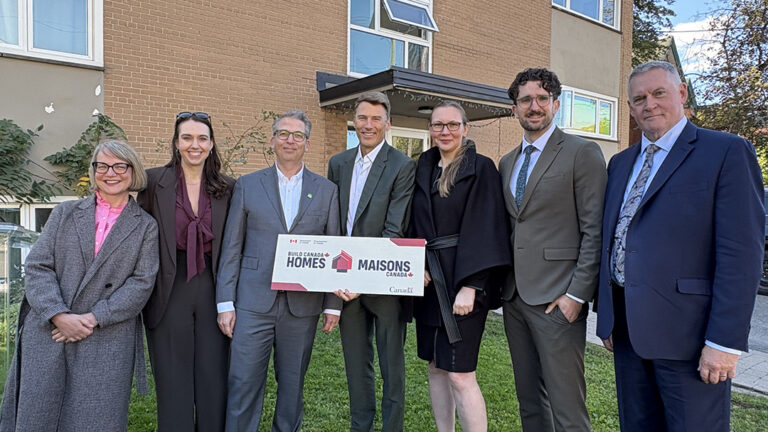

During the Centre’s webinar Save money with energy-efficient retrofits and construction, speakers Dami Dabiri, Energy Manager at the BC Non-Profit Housing Association (BCNPHA), and Majed Hargaaya, Manager of the Regional Energy Coach program at the Centre, discussed practical retrofit strategies, common misconceptions, and lessons learned from real-world projects.
The session focused on how organizations can identify upgrades that improve building performance, reduce energy loss and support long-term sustainability.
Energy retrofits can feel difficult to navigate, particularly for housing providers balancing aging buildings, limited budgets and competing operational priorities. The Salmo Valley Estates retrofit project discussed during the session offered one example of how organizations can approach upgrades strategically over time, rather than relying solely on large-scale redevelopment or deep retrofit projects.
Which energy upgrades are actually worth prioritizing?
Majed Hargaaya emphasized that the most effective retrofit strategies are not always the most expensive ones. Before replacing major systems or undertaking complex upgrades, organizations can achieve significant improvements by focusing on the building envelope.
The building envelope includes walls, roofs, insulation, windows, and air barriers, all of which help control how heat moves in and out of a building. When buildings lose heat through gaps, poor insulation, or air leakage, heating systems need to work harder, increasing energy use and operational costs.
“Air sealing and attic insulation: low cost, high savings,” Hargaaya said.
Measures like air sealing and attic insulation are frequently used as early retrofit measures because they can reduce energy loss without requiring major infrastructure replacements. A key theme throughout the session was that retrofit planning is primarily about understanding how buildings are performing and identifying which upgrades are likely to have the greatest operational impact. Energy assessments, operational data and building reviews help organizations identify issues such as air leakage, overheating and underperforming heating or cooling systems. They reduce the risk of costly investments that may not address underlying building performance issues.
Addressing building envelope issues early in the retrofit process is also an important part of long-term retrofit planning. Improvements such as insulation and air sealing reduce energy loss and support longer-term retrofit planning.
Retrofit approaches can also vary significantly in scope. While deep retrofits involve major upgrades across multiple building systems, incremental retrofits focus on phased improvements completed over time.
Large-scale redevelopment projects and expensive technology upgrades receive the most attention. “Solar and heat pumps get the press, the rebates, the photo ops,” as Majed Hargaaya noted, but many organizations can achieve meaningful improvements through smaller, phased interventions.
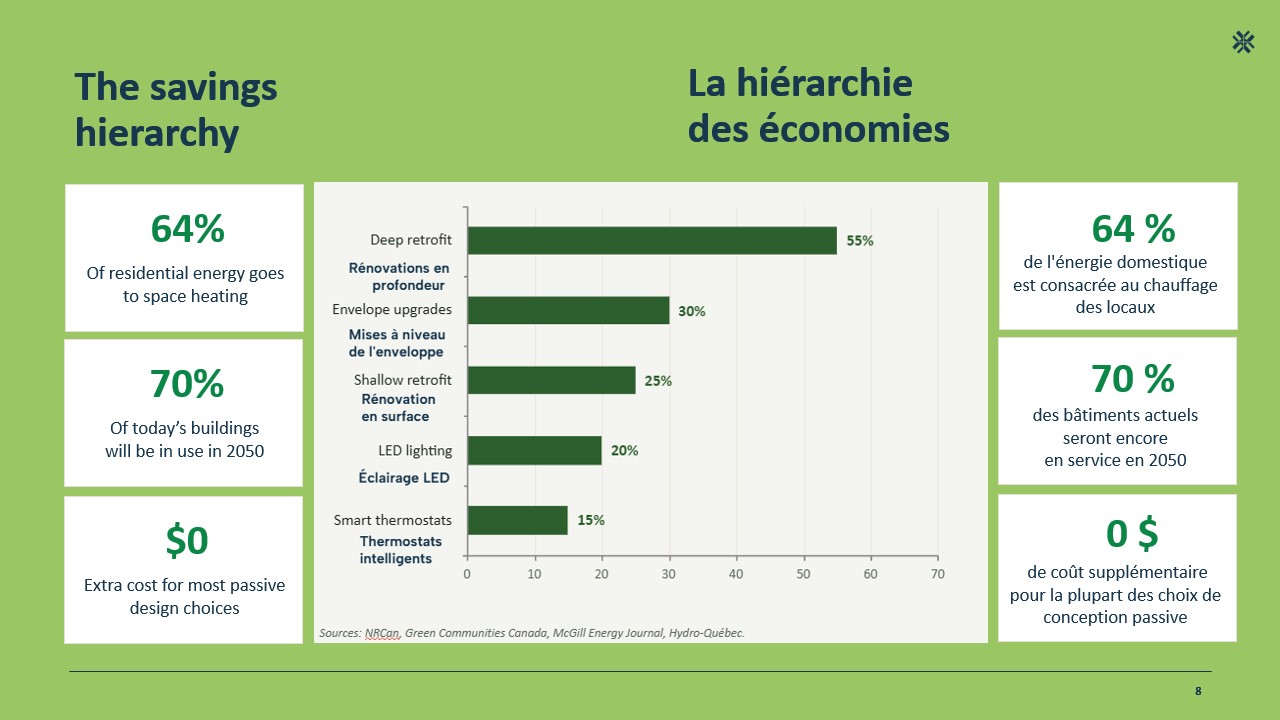
A common misconception is that deep retrofits are the only way to achieve meaningful savings. As Hargaaya explained: “Shallow and staged retrofits deliver real savings.” For many housing providers managing limited resources and aging assets, phased approaches are more realistic and easier to integrate into long-term capital planning.
The session also reinforced that retrofit projects are rarely straightforward. Timelines, funding, procurement processes and operational realities affect how projects evolve over time.
What housing providers can learn from Salmo Valley Estates
The Salmo Valley Estates retrofit project offered a practical example of how housing providers can approach retrofit planning incrementally while balancing operational realities.
Built in 2014, Salmo Valley Estates is a 20-unit seniors’ housing building operated by the Salmo and Area Supportive Housing Society in Salmo, B.C. The building was developed to support independent living for seniors who wanted to remain in the community while accessing meals, amenities and support services.
Rather than relying on a single large-scale intervention, the project evolved incrementally over time. Operational issues were addressed first, while additional upgrades, including rooftop solar PV, heat pump installations, equipment relocation and backup power improvements, were later incorporated as funding opportunities and project coordination evolved.
Dami Dabiri described the project timeline:
“It took two years to go from inception to shovel in the ground.”
The process began in fall 2023 when the housing provider engaged its mechanical contractor to investigate overheating and leaking issues affecting the building. The contractor’s assessment identified problems with several mechanical systems and helped clarify the scope of the immediate repairs required. Once BCNPHA became involved, the focus expanded beyond addressing equipment failures alone. An energy audit and subsequent Level 2 energy assessment were completed to identify additional energy conservation opportunities, assess technical constraints and support funding applications for a broader package of retrofit measures.
Equipment lead times and construction sequencing also affected how and when the work could proceed.
As Dami Dabiri explained:
“We had two major pieces of equipment in the building that were not functioning as they should have been. We had an old swamp cooler on the roof that was causing overheating in suites below and leaking into the building. The second piece of equipment was a dual-fuel heat pump unit serving the dining hall, and it wasn’t providing adequate heating due to an undersized heating coil.”
The project reinforced several of the priorities discussed throughout the session, including using energy assessments to guide decision-making and sequencing upgrades alongside available funding opportunities.
The project also highlighted how retrofit work can quickly become more complex once multiple systems, contractors and funding sources are involved. Structural assessments, equipment coordination, procurement timelines and funding requirements all influenced how the project evolved.
Dabiri explained: “We started with the operational issues first.”
Initial priorities focused on malfunctioning cooling systems, overheating and rooftop equipment issues affecting building performance. Additional measures were later incorporated into the project, including rooftop solar PV, a natural gas backup generator, kitchen heat pump upgrades and the relocation of rooftop equipment. The final project scope represented approximately $434,000 in retrofit investments.
The Salmo Valley Estates project also highlighted the importance of strong project leadership. As Dabiri noted:
“The project team is so important, especially for a multi-measure project like this one. You need a solid team to achieve the best outcomes.”
The project also demonstrated the range of expertise often required for multi-measure retrofits. The team included the housing provider, energy and funding advisors, a mechanical consultant, mechanical and electrical contractors, a solar contractor and a general contractor. Bringing those perspectives together early helped the team coordinate interdependent upgrades across multiple building systems.
Dabiri also emphasized the importance of project leadership:
“The project champion is probably even more important than your team of experts.”
They are responsible for maintaining momentum, providing direction and helping move projects forward through funding delays, coordination challenges and long planning timelines.
Dabiri also highlighted the value of working with contractors already familiar with the building and its systems, particularly when troubleshooting performance issues and planning upgrades.
The experience at Salmo Valley Estates reinforced that retrofit projects are not only technical exercises. They also require long-term planning, coordination and flexibility, especially when improvements are being completed in occupied buildings.
How to start planning a retrofit project
Effective retrofit planning starts with understanding building performance and identifying the most impactful opportunities for improvement. From there, providers can begin prioritizing achievable upgrades, developing phased retrofit plans, and coordinating opportunities to align improvements with existing capital planning cycles.
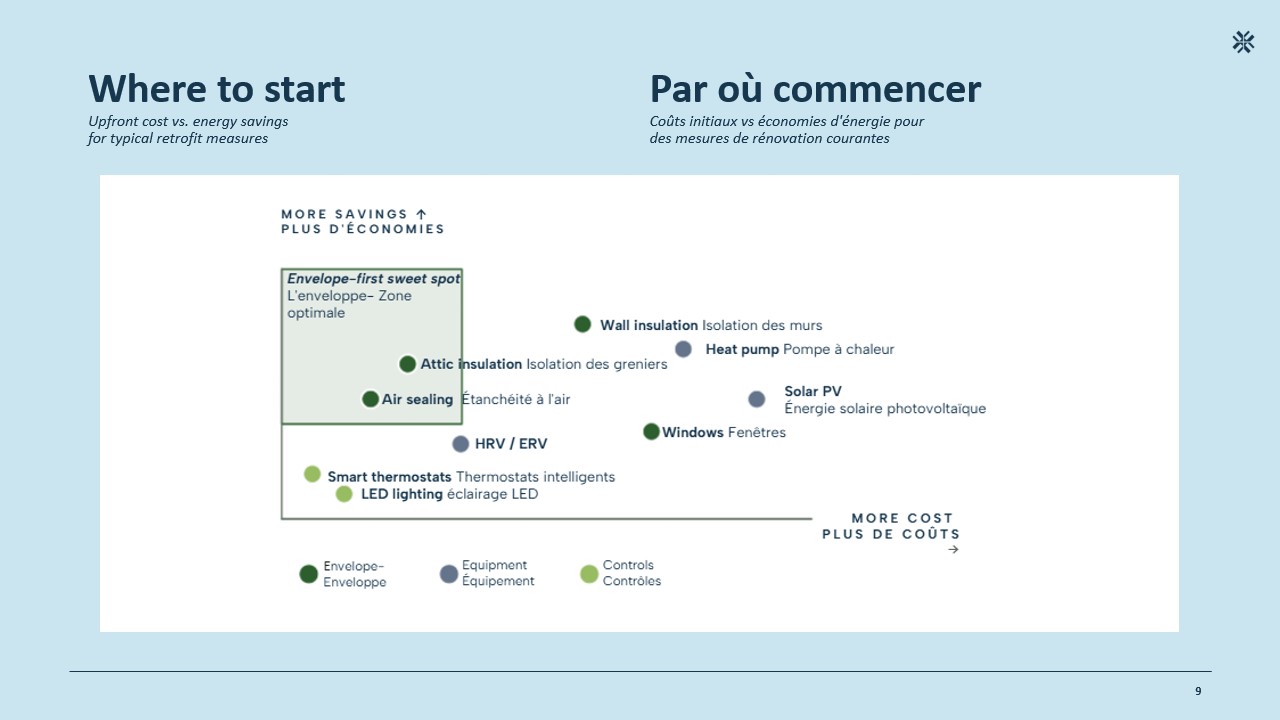
Seeking technical support early in the process also helps organizations navigate retrofit planning more effectively. Programs such as the Regional Energy Coach (REC) support housing providers navigate retrofit planning through technical guidance, energy planning support and funding navigation for retrofit projects.
Retrofits don’t have to start big
Energy retrofits are often framed as large, complex projects. But practical, well-planned improvements, particularly those focused on building envelopes and energy loss, can move organizations closer to their long-term sustainability goals.
For organizations balancing aging infrastructure, limited resources, and long-term operational pressures, understanding where to start can make retrofit planning feel more achievable and strategic.
Want to learn more?
Watch the webinar replay and explore retrofit planning resources available through the Centre’s Resource Inventory.