

Canada’s housing sector is accustomed to measuring progress through numbers: homes built, dollars invested and households served. These indicators are essential, but they do not always explain why housing challenges persist despite sustained effort and the work of thousands of organizations across the country.
Established in 2018 by a network of community housing organizations, with $50 million in support through the National Housing Strategy, the Centre was created to do more than fund individual projects. Its role is to help strengthen the conditions that allow community housing organizations and the sector as a whole to grow, adapt and create lasting impact.
The Centre is now working on its first major pan-Canadian impact report, looking back on the period from 2020 to 2025. The report will offer a fuller picture of how investments in capacity, planning, partnerships and innovation have supported organizations across the country, and what can be learned for the future.
Now, we need input from the sector.
From counting results to understanding change
Canada’s community housing sector includes thousands of independent organizations: co-operatives in Quebec, Indigenous-led projects in Nunavut, supportive housing providers in Calgary and many others. Each works within its own local context, funding environment and community relationships.
Traditional reporting tools, including grant reports, satisfaction surveys and unit counts, remain important. They help demonstrate what was delivered and who was reached. However, they offer only part of the picture. They do not always capture how organizations experience change, how they adapt to new opportunities or challenges, or what conditions enable them to strengthen their work over time.
To complement these methods, the Centre is using Sensemaking, a narrative research approach that gathers short stories from people involved in funded organizations and asks them to interpret the significance of their own experiences. These stories can reveal patterns in how funding has influenced organizational capacity, decision-making, relationships and long-term goals.
“The idea is that stories carry meaning that surveys can’t,” explains Fiona Wright of CTFutures, the consultancy hired by the Centre to produce this impact report. “When someone tells you about a moment that mattered to them; a funding breakthrough, a community decision that surprised them, a relationship that changed how they worked, they’re giving you a window into the system. And when you collect hundreds of those windows, patterns emerge.”
What five years can teach us
The 2020–2025 impact report, due for publication later this year, examines the structural conditions shaping the sector and the changes needed to strengthen its long-term capacity.
Canada’s community housing sector is highly dispersed. With an estimated 7,500 non-profit and co-operative providers managing approximately 270,000 homes, many organizations operate at a scale that can make it challenging to sustain specialized expertise in areas such as asset management, financing, development and organizational succession on their own.
This creates significant challenges for coordination, resource allocation and long-term planning across the sector. With so many organizations operating independently, it becomes more difficult to share expertise, align strategies and build the collective capacity needed to manage assets, pursue development opportunities and respond effectively to changing conditions.
If Canada is to move meaningfully toward a future where community housing represents 20% of the housing stock, the sector will need stronger shared infrastructure, consolidation pathways and collaborative platforms to help organizations preserve homes, manage risk and grow.
“The sector has a proud history of serving people with the greatest housing needs,” says Lisa Ker, Executive Director of the Centre. “But achieving the ambition of a community housing sector that represents 20% of Canada’s housing system will require a broader conversation. Community housing must be recognized not only as a social support, but as essential infrastructure that contributes to economic resilience, community well-being and long-term housing affordability for Canadians from many walks of life.”
The experience of the pandemic also highlighted both the commitment of community housing organizations and the pressures they face. Across the country, providers continued to house people, deliver services and support tenants during an extraordinary period of uncertainty.
For many organizations, this continuity was made possible through emergency public support and the determination of staff, volunteers and community leaders. At the same time, the pandemic reinforced the importance of building organizations and systems that are better positioned to absorb shocks, plan ahead and sustain their work over the long term.
This raises an important question for the sector: how can Canada build a community housing system that has the capacity, resources and resilience to plan and act before a crisis requires an emergency response?
Have you received funding from the Centre?
Have you used the Centre’s tools or resources? Have you partnered with the Centre? We need your input.
Complete the Sensor here: https://www.ctfutures.ca/chtc-your-impact-story
Promising models for the future
Alongside these broader lessons, the report will share examples of organizations that have achieved positive impact through the Centre’s funding, strengthening housing, local leadership and community development.

In Quebec, UTILE, has developed a student housing model that combines financial innovation with strong community roots. Its work demonstrates how non-profit housing providers can grow their capacity, engage in development and remain grounded in a social mission.
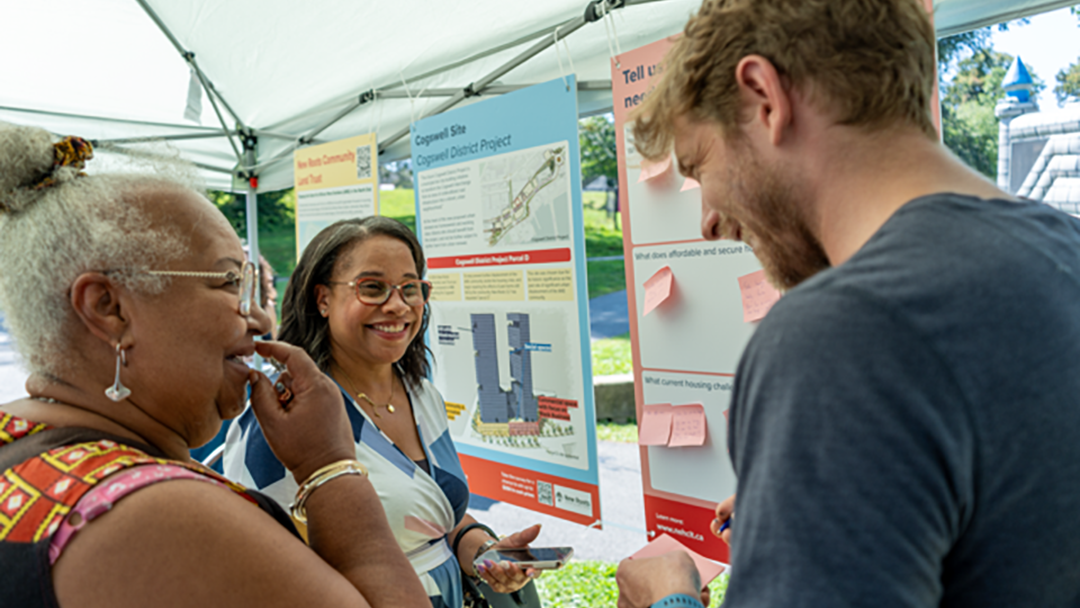
In Nova Scotia, New Roots Community Land Trust responded to the displacement risks associated with the Cogswell Interchange redevelopment by mobilizing residents to preserve their place in the neighborhood and support development that includes housing, community, cultural and commercial spaces.

In the far north, Amautiit Inuit Women’s Association is training Inuit women to become certified housing inspectors, creating local expertise in a field that has historically relied on workers flown in from southern Canada. This work is helping establish new housing-service capacity while supporting employment, local knowledge and greater self-determination within Nunavut communities.
“These are innovations in power,” Ker says. “Not just in housing models, but in who decides, who benefits, and who gets to build. That’s the direction we want to be moving in and those are the stories we want to be able to tell more of.”
Listening for emerging signals
The Sensemaking story collection supporting the impact report is now underway. It is engaging organizations from across the Centre’s portfolio whose projects are advanced or complete.
Participants are invited to share short stories about their experience with a project: a meaningful moment, a turning point, an unexpected outcome or a change in direction.
They then interpret their own story through a series of questions. Did the experience reflect a shift in mindset? A change in decision-making? A new type of collaboration?
By contributing and interpreting their experiences, participants help place their stories within a broader picture of change across the sector.
“The beauty of this approach is that it honours the knowledge that’s already in the room,” says Wright. “People who work in community housing know things that researchers don’t. They’ve seen what works and what doesn’t, at a granular level, every single day. Sensemaking gives us a way to collect that knowledge systematically and look for patterns. It’s use not to confirm what we already believe, but to be genuinely surprised in new patters that emerge from the complex system’s quiet signals.”
The Centre’s goal is to collect at least 500 micro-stories. This will create a sufficient base of experience to identify meaningful patterns: where the system is evolving, where organizations continue to face barriers, and which conditions appear to support more durable forms of change. Support in completing the questionnaire is available to anyone participating in the survey, for more information click on the survey link below.
Closing one chapter and informing the next
“Over the past five years, we’ve had the privilege of working alongside organizations of all sizes in communities across Canada,” says Ker. “This report is an opportunity to learn from their experiences and better understand how investments in capacity, leadership, partnerships, and organizational development contribute to lasting change.
We hope the findings will help inform the next phase of growth for the sector and support the collective ambition of building a stronger community housing system for the future.”
Have you received funding from the Centre?
Have you used the Centre’s tools or resources? Have you partnered with the Centre? We need your input.
Complete the Sensor here: https://www.ctfutures.ca/chtc-your-impact-story