After focusing on a single property for more than 50 years, Student Housing Nova Scotia (SHNS) turned the loss of its only building into an opportunity to reinvent itself and launch a province-wide housing portfolio.
Founded in 1965, this non-profit organization developed a 112-unit building in Halifax’s south end to provide housing for post-secondary students with families, a group largely overlooked by the housing market at the time. Whether they lived with a spouse, children, or a parent in their care, they could access deeply affordable housing. As recently as the early 2020s, for example, rent for a one-bedroom apartment was under $800 per month,about half the local market rate.
For more than 50 years, SHNS focused on operating that single property and its on-site childcare centre. By 2023, however, the conditions that had sustained this model were shifting. Its operating agreement was coming to an end, resulting in the loss of the organization’s only property. At the same time, housing pressures were intensifying across Nova Scotia, and the need to serve a more diverse student population was becoming increasingly clear.
The organization faced a defining question: how could it preserve and expand the student housing supply that had been built up over time for Nova Scotia’s students?
Watch the webinar
On September 22, 2026, as part of our Knowledge Sharing Series, Mitchell Archibald, Executive Director of SHNS, unpacked the acquisition strategies behind this transformation in the webinar Buying what others can’t see: Student Housing NS’ acquisition strategy. The conversation explored how non-profit housing providers can uncover opportunities, put together the right team, conduct effective due diligence, and compete in a market dominated by private developers.
From one building to a regional mission
The changing landscape made a new strategic direction essential, and a clear consensus emerged: SHNS needed to evolve its model. The appointment of Executive Director Mitchell Archibald reflected both continuity and change. Before assuming the role in 2023, Archibald had experienced the organization from nearly every angle: as a tenant, volunteer, contractor, and board member. His path is a powerful example of tenant involvement coming full circle.
“When I was a student, I lived with my spouse at the time in the first building. It was what allowed me to get through grad school,” he recalls. “Now I’m Executive Director. It’s really come full circle.”
That firsthand experience gave him a deep appreciation for the organization’s original mission while helping him recognize how student housing needs had evolved. In the 1960s, students with families were particularly underserved. Today, however, housing insecurity affects a much broader student population. Those pressures intensified around 2020 and 2021. Nova Scotia experienced rapid population growth, rents climbed sharply, and fixed-term leases became increasingly common. At the same time, changes in the post-secondary sector added additional strain on an already tight rental market.
As the region’s only operating non-profit housing provider dedicated to students, SHNS saw both an urgent need and a responsibility to respond. Archibald recalls a board member putting it plainly: “It’s incumbent upon us to do that.” The organization’s mission expanded beyond a single Halifax property serving post-secondary students. Today, the organization provides, develops, and advocates for housing that meets the needs of students, recent graduates, and young professionals across Nova Scotia.
An opportunity to press reset
SHNS entered this transition phase with an important advantage: through decades of operation, it had built reserves that provided a measure of financial security, even as it prepared to lose its original property.
But financial resources alone would not be enough to guarantee success. The organization also strengthened its governance and its board. It put robust oversight mechanisms in place and developed integration strategies for newly acquired properties, while reviewing the policies and processes that would guide its next chapter.
“We had the opportunity, uniquely, to really press pause on everything, to make everything better that we wanted to make better, and then move on,” Archibald explains.
Beginning in 2024, SHNS’ approach to acquisitions changed completely. Growth was no longer viewed as separate from the mission. It became a way to diversify risk, strengthen the organization, and serve more students over the long term.
Learning to think like a developer
Moving from operating a single building to acquiring properties across the province required a different mindset.
Non-profit housing organizations are often cautious about risk. But SHNS recognized that trying to eliminate all risk could create a different kind of vulnerability. When an entire organization depends on a single property or agreement, one unexpected change can put its entire portfolio at risk.
The management team began to think more like private developers: monitoring the market, preparing in advance, and acting quickly when the right conditions emerged.
“Developers will wait for the right conditions and then they will act,” Archibald says. For SHNS, those conditions had arrived and the organization could not afford to move slowly. That did not mean abandoning its social purpose. It meant evaluating each opportunity through both a mission and business lens. Affordability, location, readiness, building condition, insurability, and risk all mattered, but ultimately, the numbers also had to work.
“For acquisitions, you have to make the trade-off each time,” Archibald says. Some properties may advance the mission directly through deeper affordability. Others may generate revenue that strengthens operations and supports the broader portfolio. There is no perfect acquisition formula: assessment tools can guide discussion, but organizational judgment remains essential
Rebuilding in a matter of years
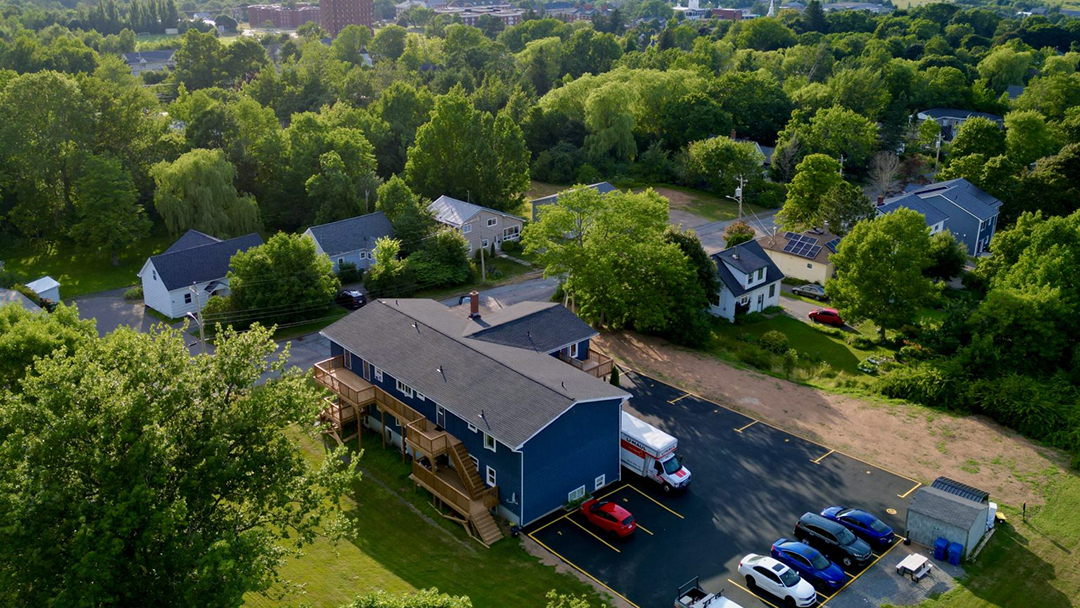
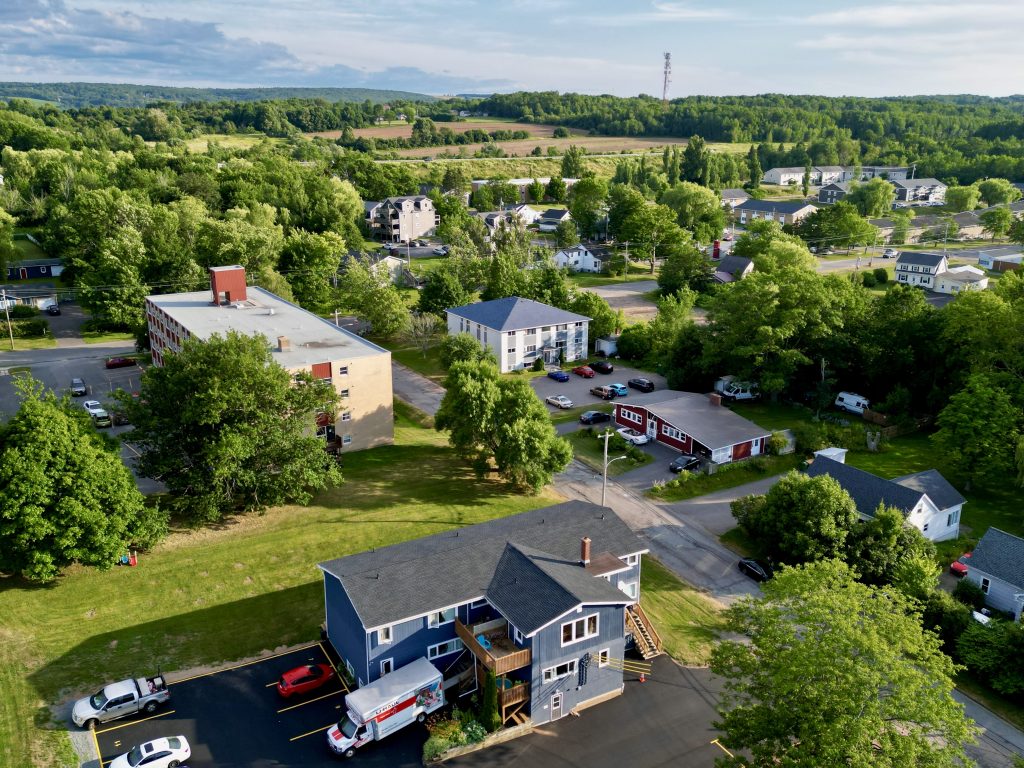
The results have been impressive. Since beginning to implement its new strategy in 2024, SHNS has acquired six properties. The portfolio includes a property in Wolfville, acquired in May 2026 with support from the Centre through the Nova Scotia Community Housing Capital Fund. In only a few years, an organization that was losing its only building has transformed into a multi-property owner. A remarkdable turn of events.
But this transformation is about more than just the numbers. Student Housing Nova Scotia has evolved from a single building serving primarily students with families to a regional portfolio that meets a broader range of student and youth housing needs while diversifying risk. The organization is also building a model that can remain viable without relying exclusively on government funding. In doing so, it is helping ensure the long-term sustainability of its social mission.
Buying what others can’t see: Student Housing NS’ acquisition strategy
Hear the full story from Mitchell Archibald on September 22, 2026, by registering for our knowledge sharing webinar. In this session, he’llunpack the acquisition strategies behind SHNS’s transformation and explore how non-profit housing providers can uncover opportunities, build the right team, conduct effective due diligence, and compete in a market dominated by private developers.